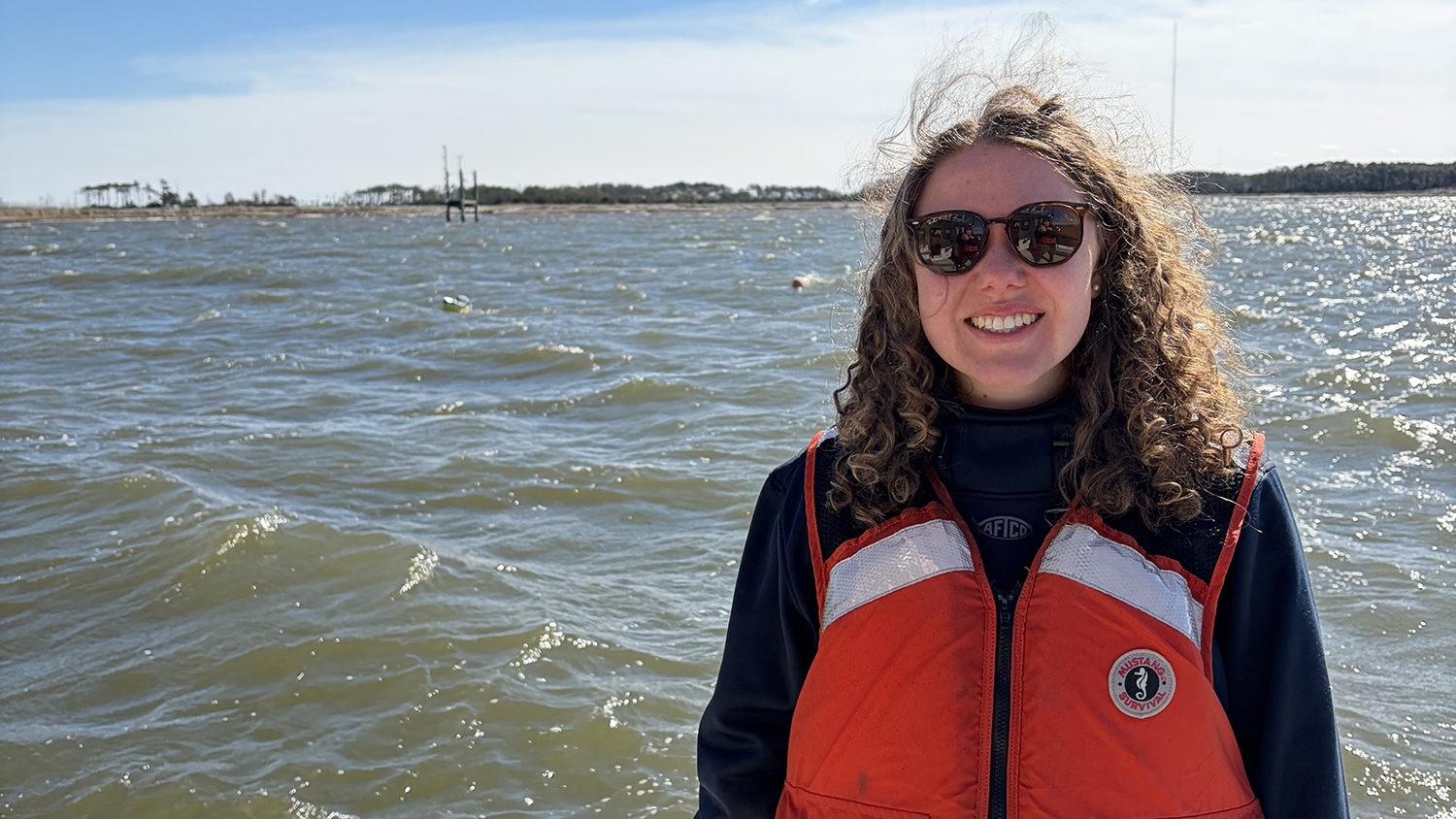
Student Spotlight: Meet Cornelius Ojo, Interdisciplinary Sustainability Champion
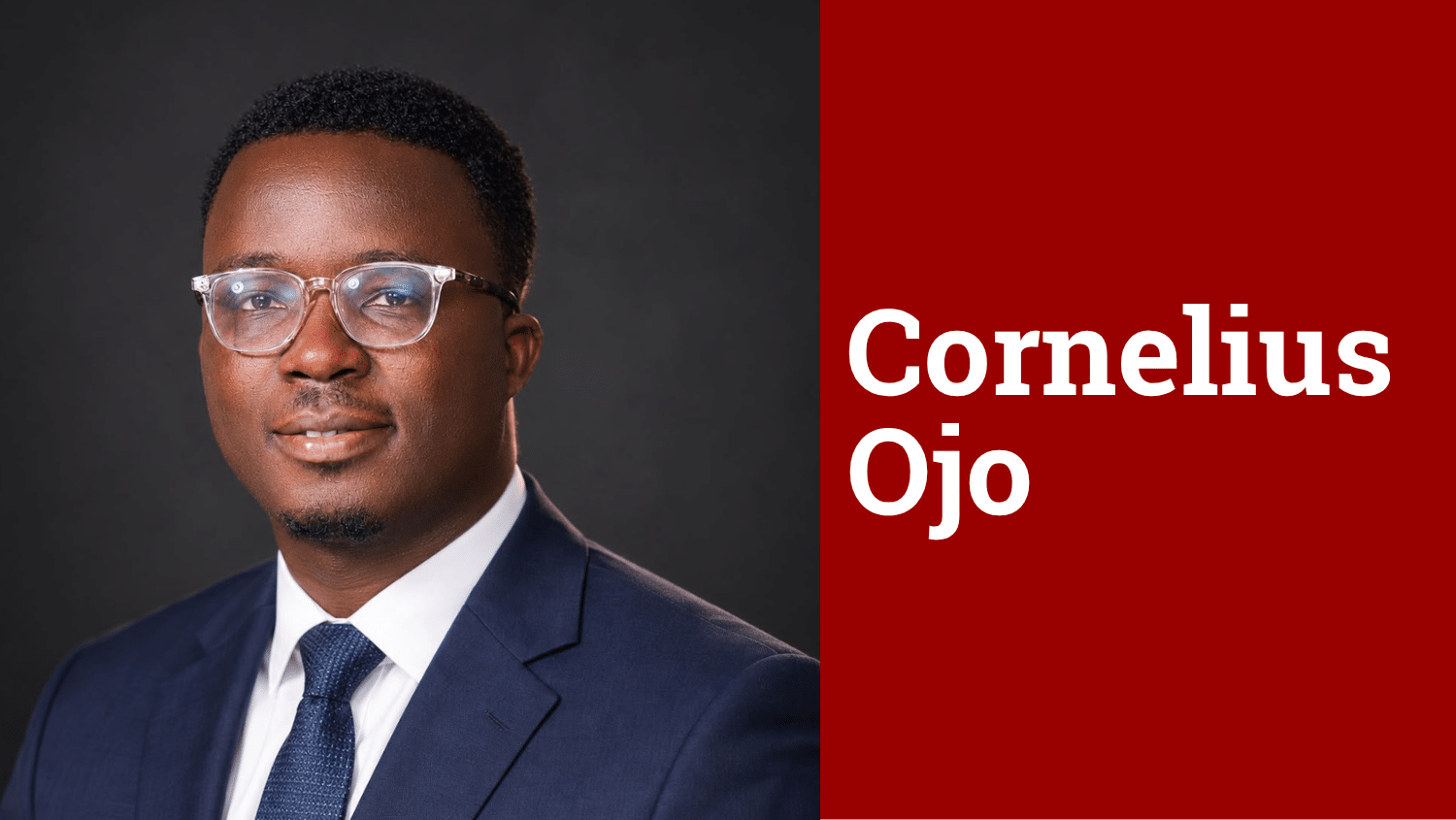
Originally from Nigeria, Cornelius Ojo is a fourth-year PhD student in NC State’s College of Design studying Urban Design and Planning. Cornelius earned bachelor’s and master’s degrees in architecture. Through his work in Kinston and Wilmington, North Carolina, as well as his experiences in the 2025 The Kenan Institute for Engineering, Technology & Science (KIETS) Climate Leaders Program and as a Climate and Sustainability Academy ambassador, Cornelius examines how the spaces we build shape the communities we call home and everything that goes into them.
When we think of sustainability, our minds often turn to solar panels, renewable energy, or the hard sciences. However, sustainability extends far beyond what we would call the “hard sciences”. Sustainability is also a part of the communities we build, the spaces we share, and the ways we care for the people who are a part of them.
The prime example of the interdisciplinary spirit? NC State PhD student Cornelius Ojo, who embodies it through exploring how thoughtful urban design can help communities thrive, even in the face of adversity.
“Usually, in architecture, you are looking at individual buildings, but when it comes to urban design, you’re looking at an entire community.”

Impact in Communities Big and Small
As a fourth-year PhD student, Cornelius is exploring how urban planning and policy can help communities navigate the growing challenges of climate-related disasters. His research brings him to two seemingly different cities: Wilmington, a steadily growing city in New Hanover County, and Kinston, a smaller community of roughly 20,000 residents in Lenoir County experiencing a small population decline. Despite their differences, these cities find common ground in the fact that both face recurring threats from hurricanes and flooding.
Cornelius’s interest in Kinston began with a classroom discussion about Hurricane Floyd. In 1999, the hurricane hit Lincoln City, a predominantly African-American community, and the city ended up being submerged by floodwaters. The story stayed with him, raising questions about how communities experience disasters and what it takes to recover from them.
After researching Wilmington residents’ perceptions of potential flood mitigation strategies, he saw an opportunity to bring the two cities into conversation. By examining their differences, Cornelius hopes to understand how communities at different stages of growth can better meet residents’ needs while building resilience against environmental risks. But his path to this work began long before his PhD
The First Spark
Cornelius’s interest in sustainability first took form through an undergraduate capstone project, where he investigated a new possible alternative to traditional sandcrete blocks used in construction in Nigeria.
However, beyond studying this new and promising material itself, Cornelius also sought to understand how communities might respond to adopting something unfamiliar. Through community outreach, he explored its potential benefits and barriers to implementation, as well as what members of the community thought of it. He found that since the community must finance construction themselves, embracing an unfamiliar material can feel like a financial risk, even when its potential is promising.
That experience taught an interesting and often overlooked lesson: A good idea is only the beginning. Meaningful change also depends on whether people can realistically put that idea into practice, which is a lesson that he still carries into his research today.
“A lot of the time, we as professionals…might have the best ideas, but implementation is the real deal. Can you implement that idea?”
During his master’s studies, Cornelius explored behavioral architecture through a project focused on a drug rehabilitation center. He considered how certain design principles, like incorporating nature and creating calming spaces, could support the rehabilitation process, recognizing that the built environment cannot heal someone on its own but can help shape their experience. This experience opened his eyes to the fact that with design, he could improve the lives of those who aren’t often considered.
Together, these projects deepened his interest in the relationship between community, sustainability, and well-being, eventually leading him toward hazard-prone communities and the challenges they face when he came to the United States for his PhD.

A Domino Effect
The communities Cornelius studies face recurring disruptions from hurricanes and flooding, but his work looks beyond the disasters themselves to the everyday conditions that shape how residents experience them. Rather than focusing solely on responses to recurring disruptions, he hopes to understand how communities can better support their residents before, during, and after these events.
Put simply: For Cornelius, resilience begins long before the storm arrives.
During his outreach in Kinston, he met with residents, listened to their frustrations, and asked a simple question: How is life here? Their answers included challenges with accessing clean drinking water and the closing of local grocery stores. These conversations helped Cornelius recognize how the accessibility of basic needs shapes daily life. Thoughtful urban planning can make these basic necessities easier to reach, reducing the time, effort, and transportation costs residents face simply trying to meet their basic needs. This can also circle back and turn into being healthier due to expending less energy trying to meet your needs.
Sadly, these challenges rarely exist independently of one another. Cornelius noted that when a hurricane strikes, someone already struggling to access groceries may find themselves unable to leave home at all. What could begin as an everyday inconvenience can become a much greater vulnerability when a crisis hits unexpectedly.
For Cornelius, this domino effect underscores why communities must be designed around the realities of residents’ lives, ensuring that access to necessities does not become another obstacle to overcome, highlighting a similar principle he first came across in his undergraduate studies.
Support at NC State
For Cornelius, being an international student has offered a new perspective on how access to resources can shape the pursuit of knowledge. At NC State, reliable electricity, research materials, and institutional support have made aspects of his work more accessible, or as he puts it, “It’s easier here…”
He speaks fondly of NC State’s library, which has helped him access research that might otherwise be difficult or expensive to obtain. When articles are unavailable through the university’s databases, he can request them and receive them within a short time. “These are privileges…” He notes — ones that may not exist for students in developing countries. During our interview, he had just received four or five requested articles. He also shared that the library had purchased a copy of Your City Is Sick, a book recommended to him by a Kinston resident during community outreach. After discovering that the library did not carry it, Cornelius submitted a recommendation, and the library soon purchased a copy and notified him that it was ready for pickup shortly after.
Another thing he appreciates is the accessibility of NC State’s faculty and the financial assistance available to international students. When the upfront costs of an internship threatened to put the opportunity out of reach, university support helped him secure a $3,000 loan to get started with upfront costs.
Oddly enough, this echoes another lesson that echoes faintly throughout Cornelius’s research: The difference between an opportunity and an obstacle comes down to whether the right support is available and within reach.
Whether in a university or a community vulnerable to environmental hazards, reducing barriers can open doors and expand possibilities.

Learning from Mentors
During his year as a fellow in the KIETS Climate Leaders Program, Cornelius participated in leadership training and traveled to Morehead City in spring 2025, where he engaged with high school students about the opportunities, challenges, and lived experiences that shape the climate field. He reflected on how young people may not yet realize just how many paths the field has to offer and how valuable effective science communication is.
The program also connected him with a mentor — Professor Gavin Smith — who offered Cornelius a valuable opportunity to learn from someone who had advised approximately three U.S. governors on disaster recovery and had extensive experience in urban planning, policy, and disaster recovery.
He also became a fellow with the Southeast Climate Adaptation Science Center, where he continues to explore science communication and community engagement. Together, these experiences have expanded his understanding of what climate leadership can look like, reinforcing how collaboration across disciplines, generations, and communities can help us approach complex challenges from new perspectives.
Through his doctoral studies, Cornelius shows how there isn’t just one approach to tackling sustainability. Cornelius is a prime example of how interdisciplinary studies thrive at NC State and how sustainability-centered problems can be tackled from many different avenues.
Today, Cornelius continues to make his own lasting impacts on the environment — one community at a time.
This post was originally published in Climate and Sustainability Academy.
- Categories: