Workshops and Support
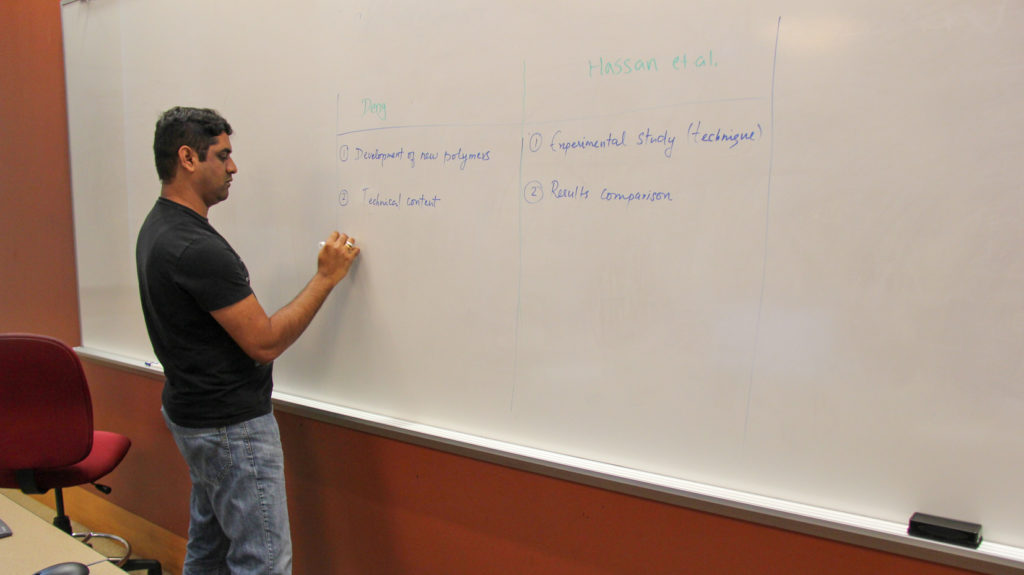
The NC State Graduate School offers workshops to support all graduate and postdoc trainees’ long-term development as communicators. All of these workshop count as requirements or electives towards the Communication Skills Certificate. NC State graduate students and postdocs can can earn the certificate by participating in the four core workshops, four elective workshops, writing retreats, and other communication support programs through the Graduate School. Below are several instances of the upcoming semester Communication Skills programming.
Fall 2026 Communication Skills Programs
These core Communication Skills Competencies workshops are designed with an emphasis on creating clear, concise, and audience-centered communication practices. Workshops are offered each academic semester, while writing retreats are offered in only fall and spring semesters. Foundational workshop topics remain the same each semester, whereas elective workshops rotate each semester.
Foundational Workshops
Writer’s Toolkit (September 1 & September 8)
In this two part workshop, we’ll focus on strategies for planning and managing a writing project, as well as fundamental tips for structuring writing for a variety of contexts. Participants will clarify their writing goals for the semester and learn strategies to implement on current and future writing projects. We will use different genres of writing projects as case studies, so participants will also gain tips for summarizing, paraphrasing, and synthesizing their writing projects.
September 1, 3-4:30 p.m.; The Graduate School Conference Room 2328
September 8, 3-4:30 p.m.; The Graduate School Conference Room 2328
Writer’s Toolkit (September 4 & September 11)
In this two part workshop, we’ll focus on strategies for planning and managing a writing project, as well as fundamental tips for structuring writing for a variety of contexts. Participants will clarify their writing goals for the semester and learn strategies to implement on current and future writing projects. We will use different genres of writing projects as case studies, so participants will also gain tips for summarizing, paraphrasing, and synthesizing their writing projects.
September 4, Noon-1:30 p.m.; Zoom
September 11, Noon-1:30 p.m.; Zoom
Concise Communication (September 15)
Do people say that your communication style is too wordy? In this workshop (formerly Concise Writing) workshop, we’ll address the challenge of creating clear and concise communication for a variety of verbal and written situations and audiences. We will review concrete strategies, such as Richard Lanham’s famous “Paramedic Method” as a means to make your professional communication concise.
September 15, 3-4:30 p.m.; The Graduate School Conference Room 2328
Concise Communication (September 17)
Do people say that your communication style is too wordy? In this workshop (formerly Concise Writing) workshop, we’ll address the challenge of creating clear and concise communication for a variety of verbal and written situations and audiences. We will review concrete strategies, such as Richard Lanham’s famous “Paramedic Method” as a means to make your professional communication concise.
September 17, Noon-1:30 p.m.; Zoom
Professional Emails (October 8)
Contact colleagues at NC State and beyond with tact and ease! In this workshop, you will gain strategies for crafting effective professional emails. Participants will practice and discuss strategies for: organizing a professional email message, making inquiries and requests, and creating a professional tone or voice in email.
October 8, Noon-1 p.m.; Zoom
Professional Emails (October 29)
Contact colleagues at NC State and beyond with tact and ease! In this workshop, you will gain strategies for crafting effective professional emails. Participants will practice and discuss strategies for: organizing a professional email message, making inquiries and requests, and creating a professional tone or voice in email.
October 29, Noon-1 p.m.; Zoom
User-Friendly Communication (October 15 & October 22)
In this two part (formerly User-Friendly Writing) workshop, we address the challenges of conveying your research in a persuasive way for technical and nontechnical stakeholders. We will focus on common structures of communication across STEM and humanities fields to include organization and interpretation of results. Using strategies such as John Swales Create a Research Spaces (CARS) Model and John Swales and Christine Feak’s User-Friendly Data Friendly Paragraphs, we will discuss how to organize our communication to be “user friendly” for our intended audiences.
October 15, Noon-1:30 p.m.; Zoom
October 22, Noon-1:30 p.m.; Zoom
User-Friendly Communication (November 3 & November 10)
In this two part (formerly User-Friendly Writing) workshop, we address the challenges of conveying your research in a persuasive way for technical and nontechnical stakeholders.We will focus on common structures of communication across STEM and humanities fields to include organization and interpretation of results. Using strategies such as John Swales Create a Research Spaces (CARS) Model and John Swales and Christine Feak’s User-Friendly Data Friendly Paragraphs, we will discuss how to organize our communication to be “user friendly” for our intended audiences.
November 3, 3-4:30 p.m.; The Graduate School Conference Room 2328
November 10, 3-4:30 p.m.; The Graduate School Conference Room 2328
Elective Workshops
Crafting Your Thesis/Dissertation Narrative (August 25)
Presenting your research as a complete story can be challenging as you navigate the thesis/dissertation process. In this workshop we will focus on the expectations that come with presenting a research narrative, discuss narrative strategies for framing your thesis/dissertation, and discuss writing strategies that will help you organize and structure your thesis/dissertation.
August 25, 4-5:30 p.m.; Centennial Campus (Textiles Complex) ZTE Classroom 2431
Developing Your ETD Timeline (August 28)
Join the Graduate School for an interactive workshop discussing how to approach the Electronic Thesis and Dissertation (ETD) process. Participants will get to ask the ETD Reviewer questions regarding the overall process, as well as gain resources for developing a thesis/dissertation timeline strategy that aligns with their anticipated graduation date.
This workshop is virtual and free to attend, but registration is required.
August 28, Noon-1:30 p.m.; Zoom
How to Respond to Reviewer Feedback (September 23)
Receiving feedback can be an uncomfortable process, whether that is for formal publications or for informal contexts. In this workshop we will address the challenges of interpreting reviewer feedback when it comes to writing, such as journal article reviewers’ comments or for improving your writing more informally. We’ll additionally look at how reviews are constructed and define strategies for addressing feedback to improve your writing.
September 23, Noon-1:30 p.m.; Zoom
Graduate Oral Defense 101 (September 30)
Learn how to master the final stage of the thesis/dissertation process. In this workshop we will be reviewing the defense process in addition to reviewing presentation strategies to best prepare for the oral defense component of your degree. Participants will additionally be able to practice their speaking skills during this workshop so they can approach their oral defense with confidence.
September 30, 3:30-5 p.m.; Centennial Campus, Engineering Building III (EB3) Room 3207
Developing Your ETD Timeline (October 1)
Join the Graduate School for an interactive workshop discussing how to approach the Electronic Thesis and Dissertation (ETD) process. Participants will get to ask the ETD Reviewer questions regarding the overall process, as well as gain resources for developing a thesis/dissertation timeline strategy that aligns with their anticipated graduation date.
This workshop is virtual and free to attend, but registration is required.
October 1, Noon-1:30 p.m.; Zoom
How to Speak with Conference Confidence (October 6)
Formal presentations for conferences can be intimidating, especially when you navigate your first conference. In this workshop we will focus on best practices for preparing and presenting at a conference. We will talk through presenting with nerves, developing your pacing as a speaker, as well as presenting in a manner that allows you to engage with your audience. Participants will also get a chance to practice their public speaking skills in a supportive in-person environment.
October 6, 3-4:30 p.m.; Graduate School Conference Room 2328
Writing Retreats
Virtual Writing Retreat (October 19 & October 20)
The Graduate School’s two-day Virtual Writing Retreat offers graduate students and postdoctoral scholars dedicated time and structure to make progress on a major writing project in a supportive online setting. The retreat is free to attend, but registration is required. You must attend both sessions for this writing retreat to count towards the Communication Skills Certificate.
October 19, 9 a.m. – 4 p.m.; Zoom
October 20, 9 a.m. -4 p.m.; Zoom
In Person Writing Retreat (December 14 & December 15)
The Graduate School’s two-day In-Person Writing Retreat offers graduate students and postdoctoral scholars dedicated time and structure to make progress on a major writing project in a supportive online setting. All in-person writing retreats have a $40 registration fee to cover the cost of venue and food. You must attend both sessions for this writing retreat to count towards the Communication Skills Certificate.
December 14, 9 a.m. -4 p.m.; Location TBA
December 15, 9 a.m. -4 p.m.; Location TBA
Registration for the In-Person Writing Retreat is currently closed. Registration will open mid-October.
Communication Skills Resources for Graduate Students, Postdocs and Faculty
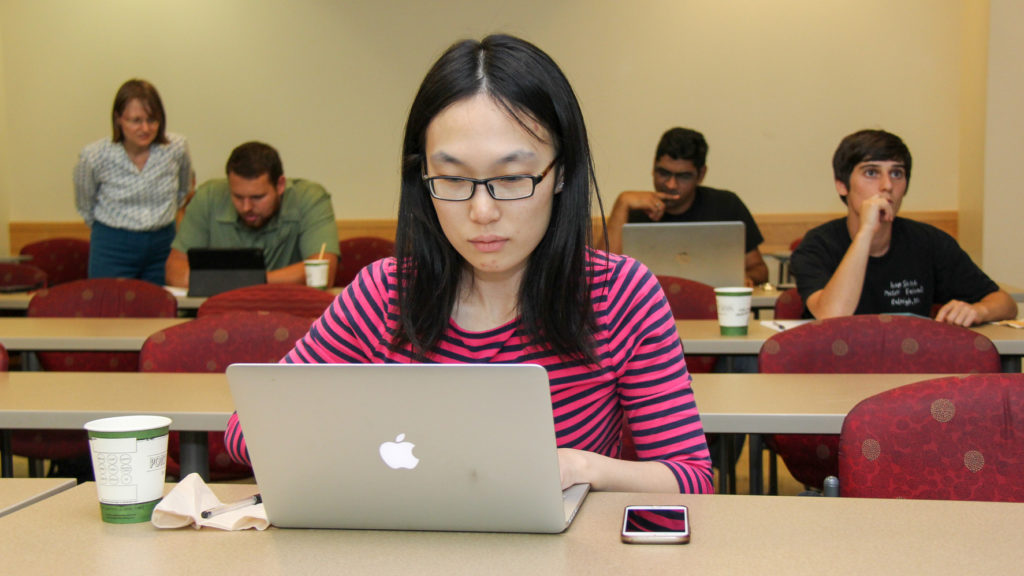
Individual Communication Consultations: Graduate and postdoctoral scholars can meet for 30-60 minute sessions to work on specific documents of their writing or to prepare for a speaking engagement, such as a conference. Get strategies for approaching these types of communication in context, whether that is starting or strengthening your academic writing or planning a defense.
Class Visits and Workshop Events: We are happy to collaborate with faculty from departments such as College of Engineering to spread the word about our communication skills and other professional development initiatives, for example, in the required first-year seminars. Faculty can request a course visit for a brief informational presentation about the Graduate School’s resources in their classes or collaborate to design a more extensive, “hands-on” workshop around a departmental event.
Written and Verbal Communication Course Consultations: We are happy to offer suggestions on designing and implementing written and verbal communication into courses, building bridges with writing-focused departmental courses and other interdisciplinary courses.